Case Study: Casa Bambu Cantina — Branding a Mexican Restaurant Through Its First Website

Giattech
Web Application Studio
How we brought Casa Bambu Cantina's brand online with its first responsive website, wired to OpenTable and Chope for direct reservations.
Table of Contents
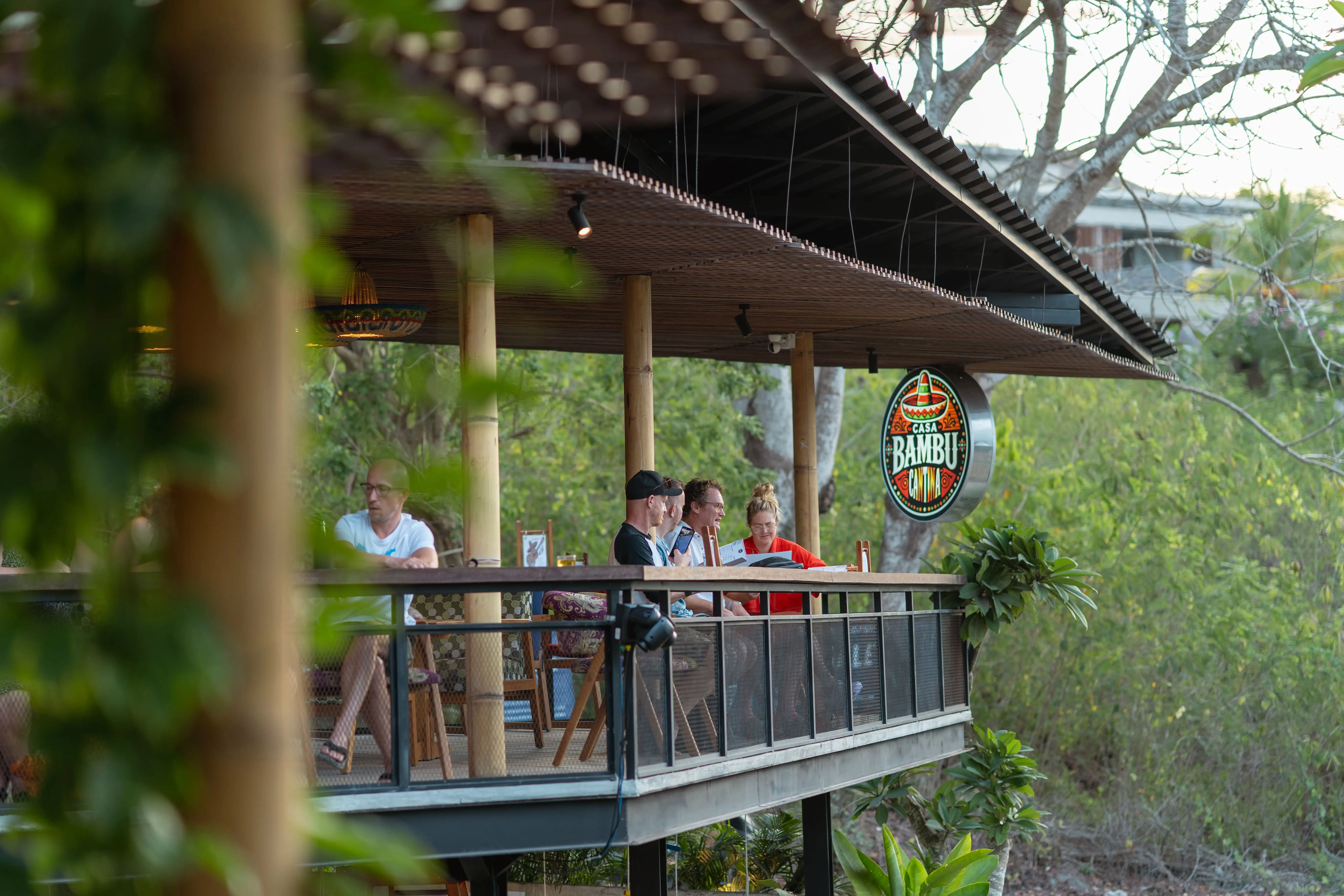
Casa Bambu Cantina has been on Nusa Lembongan for years — the island’s only cantina serving authentic Mexican food. Its reputation was built the slow way: guests who visited, loved it, and told their friends. What it didn’t have was a digital footprint anywhere near the size of that reputation.
This project wasn’t about “building a restaurant website”. It was about moving a locally beloved brand into a space anyone searching for dinner on Nusa Lembongan can find — and closing the gap between “I want tacos tonight” and “my table is booked”.
The starting point
Casa Bambu had been operating for years. What kept the doors open:
- Regular guests who knew the place personally
- Travellers referred by nearby homestays and dive operators
- Reviews on TripAdvisor and Google Maps
What was missing:
- An official website — so when a guest searched “Mexican food Nusa Lembongan” on Google, the results were review aggregators, not the Casa Bambu brand itself
- A structured reservation path — every table request came in through WhatsApp or by walk-in
- A shareable brand story — the atmosphere photos, the kitchen story, the Mexican philosophy the owners brought to Bali — it all lived in their heads, none of it lived on the internet
For a restaurant with a real story and real local reputation, that’s a large unused asset.
Why branding first, not the menu
Most restaurant website projects start with “we need the menu online”. For Casa Bambu we deliberately inverted the order. The menu belongs at the end — what has to work first is why a guest picks this place over the three other restaurants within 500 metres.
The priorities we agreed on:
- Brand identity — the name, the story, the distinctly Mexican atmosphere that separates Casa Bambu from a generic tourist restaurant
- Trust — real dining room photos, faces on the team, named testimonials, third-party reviews on display
- A frictionless reservation path — via the platforms travellers already use
- The menu — as text, not images, easy to read and easy to update when prices move
The menu made it in, of course, but it stopped being the headline.
What we built
A branding home page
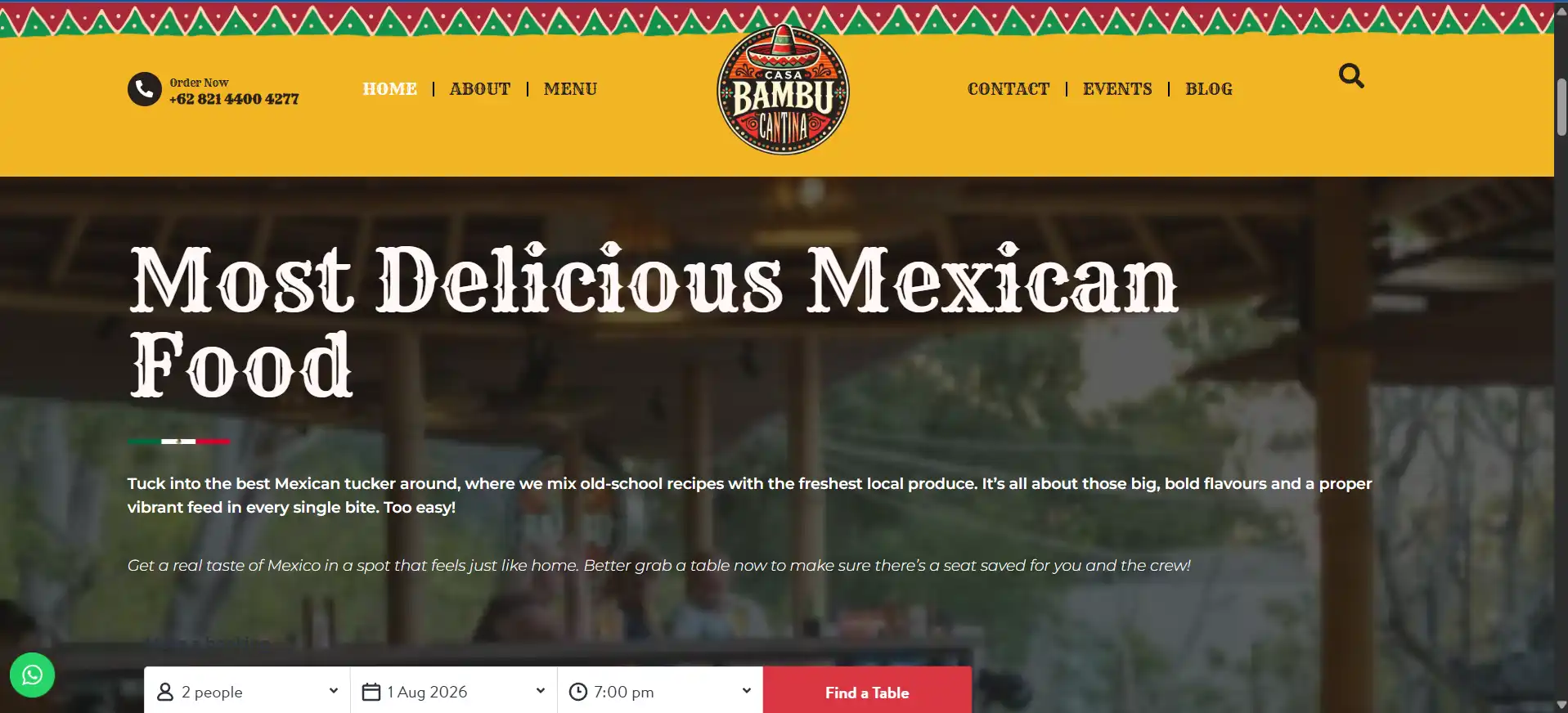
The hero page introduces Casa Bambu as the Mexican cantina of Nusa Lembongan — not “a restaurant that happens to serve nachos”. A short story about how the owners brought Mexican recipes to the island, why they chose Nusa Lembongan, and what makes the kitchen distinct.
This is the section most restaurant sites skip, and it’s the one that most often decides whether a guest picks you or opens the next tab.
OpenTable and Chope integration
Both platforms are heavily used by the two biggest visitor segments Casa Bambu serves: Australian/English-speaking travellers and South-East Asian travellers. Instead of building a booking system from scratch, we integrated the two official widgets:
- OpenTable — dominant with English-speaking travellers
- Chope — dominant with South-East Asian travellers
Both “Reserve a Table” buttons sit side by side on the home page and the menu page. Guests pick the platform they already know and trust — no need to hand a credit card to yet another new system.
The side effect is positive: reservations from OpenTable and Chope also bring the brand exposure on those platforms themselves, extending reach with no extra ad spend.
The menu as text, not images
The menu is built as structured data — not a JPG of the printed card. The wins:
- Readable on any screen — including small phones
- Searchable by search engines — Google understands “burrito”, “quesadilla”, “chimichanga” as menu nouns, not as pixels
- Updated in minutes — a price change doesn’t require Photoshop
- Schema.org structured data added so Google can surface menu items directly in search results
Fully responsive — desktop, tablet, mobile
Casa Bambu guests open the site from a mix of devices:
- Phone — a traveller walking around the island looking for dinner. This is priority one.
- Tablet — a traveller planning the trip from a hostel sofa
- Desktop — travel agents and concierges recommending restaurants to their clients
Every screen size gets a layout designed for how it’s used, not just a shrunk-down desktop view. Phones get a persistent “Reserve” button, tablets get a full hero image, and desktop gets a wider atmosphere gallery.
Consistent local information
Name, address, opening hours, and phone are identical across:
- The website
- Google Business Profile
- OpenTable
- Chope
- TripAdvisor
That NAP (Name-Address-Phone) consistency is a local-SEO fundamental people skip constantly — and it strengthens brand signals across every platform at the same time.
Technical decisions
Astro as a static site — pages ship as HTML and open fast on island mobile networks that aren’t always strong. The full rationale is in Astro vs WordPress.
Modern image formats — atmosphere and dish photography is converted to WebP with explicit dimensions, so there’s no layout shift on load. Only above-the-fold images load first; the rest lazy-load.
Restaurant structured data — search engines can surface opening hours, cuisine type (Mexican), price range, and reservation link straight in the results card.
Third-party widgets load asynchronously — OpenTable and Chope must never slow the main page down. The widgets load after the core content is ready, so page performance stays clean. The principle lives in our Core Web Vitals guide.
The outcome
- The Casa Bambu brand has its own home on the internet — not just an entry on TripAdvisor
- Reservations arrive 24/7 via OpenTable and Chope — no staff replying to messages at midnight
- The menu can be updated in minutes — not half a day
- The site appears for “Mexican restaurant Nusa Lembongan” — the brand signal that used to be scattered is now centralised
- Real atmosphere photography replaces travellers’ guesses from reviews alone
Lessons for long-established F&B businesses
Local reputation doesn’t automatically become digital reputation. A restaurant that’s been running for 5–10 years often carries a large “online branding debt” — strong offline, almost invisible online. Closing that debt is usually a separate project from “making a website”.
Third-party reservation platforms aren’t in competition with your brand. OpenTable and Chope reach audiences you won’t get through organic SEO alone. As long as their button lives on your site, guests still see your brand before booking.
A menu is data, not a poster. Restaurants that publish the menu as an image lose every SEO signal a menu could give them. It’s the most common and most expensive mistake in restaurant sites. We cover why it matters in turning your website into a sales engine.
Responsive is mandatory, not a bonus. For a tourism restaurant, most traffic comes from phones held by guests already walking around. A site that doesn’t look right on a small screen is the same as no site.
See more
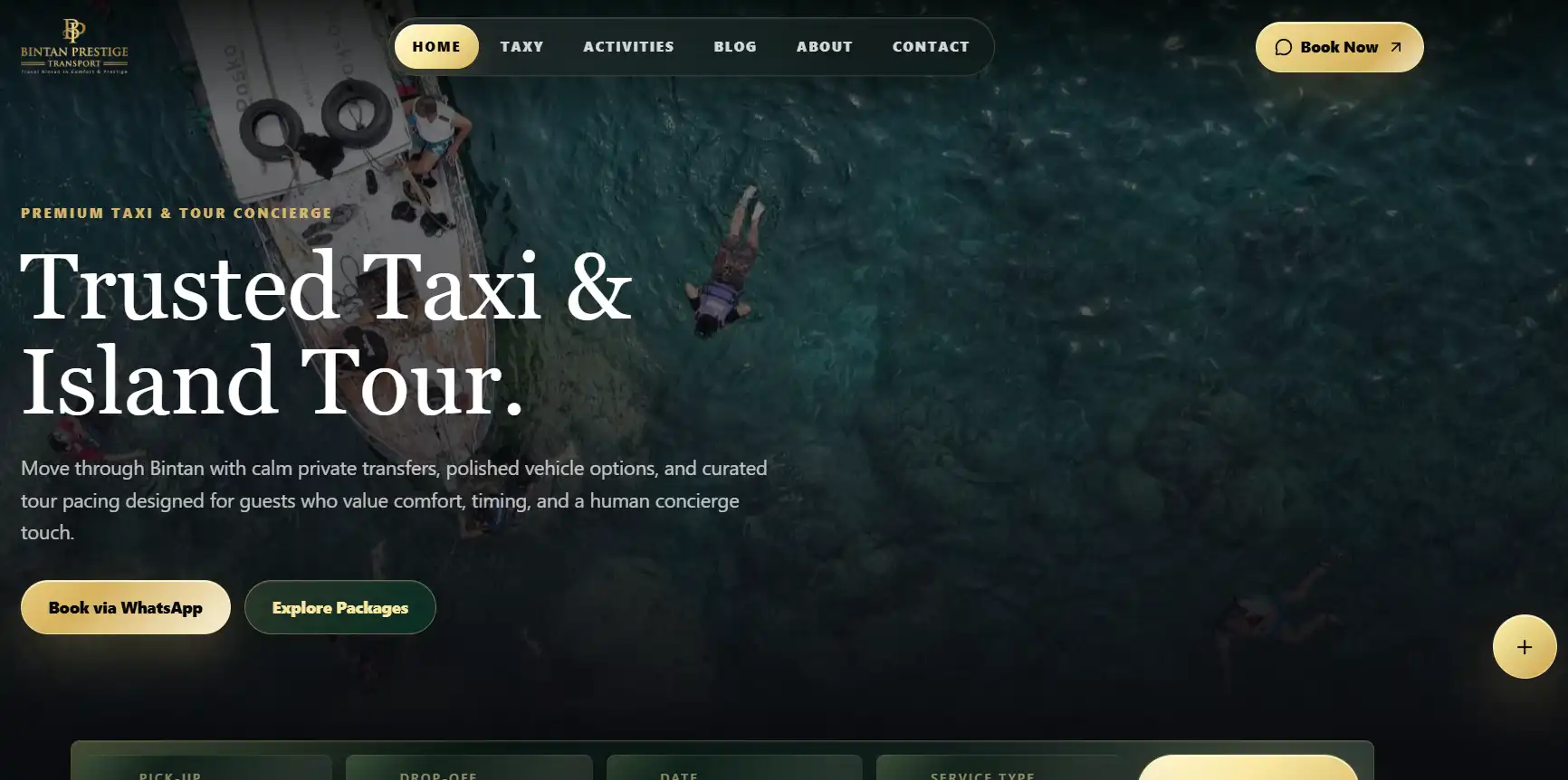
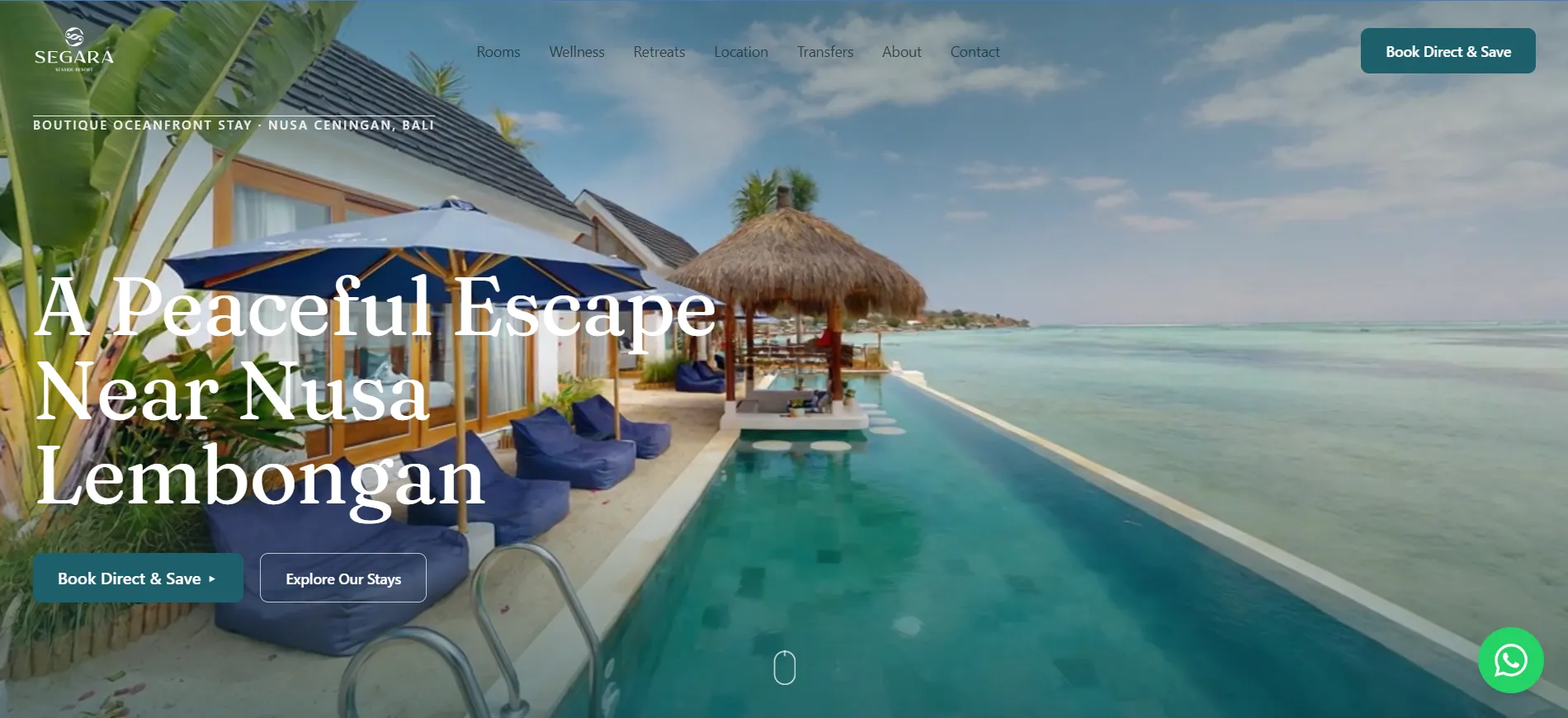
The project summary is on our portfolio. For F&B case studies with different challenges, read the Bintan Prestige Transport case study or Segara Seaside Resort.
If your restaurant or café has a strong local reputation but almost no presence online — and you’re ready to bring the brand into the digital space — let’s talk.
NEED A HAND?
Have a project you want built properly?
Giattech builds web applications, admin dashboards, and high-performance sites for businesses in Indonesia and beyond. Tell us what you need — you get a plan back, not a brochure.
 Related project Casa Bambu Cantina Restaurant - Lembongan A full-stack website design and development project for Casa Bambu Cantina in Nusa Lembongan. Focused on creating an engaging digital storefront with seamless reservation workflows, menu showcases, and optimized performance to turn casual visitors into dining guests. View project